Friday, 2 October 2015

Top Gadgets and Accessories for Hardware and Data Security

Buffalo

Encrypted Hard Drives to NFC Blockers


Hardware security solutions could help in preventing access to data and tends to offer some strong protection against tampering as well as unauthorized access on the devices. In order to securing data and physical items, one could consider investing in an encrypted NFC hard drives.Encrypted hard drives to NFC blockers have various options of protecting yourself and your data. The following gadgets and accessories could be helpful to the users according to their requirements:

Buffalo MiniStation Extreme NFC encrypted storage


Encrypted drives such as the Buffalo’s MiniStation Extreme NFC encrypted storage HD utilises NFC technology to prevent unauthorized access to information that could be stored on the device. User would find it difficult to unlock and access information from external smart card, removing the requirement for a password which could be tampered. An added benefit of the storage device is the military grade shock, dust and water protection which tends to protect the data from getting corrupted or lost in the event of it being dropped. One could get hold of a 1TB option for $129.99 or a 2TB drivefor $199.99.

iStorage datAshur Pro USB 3.0 secure flash drive


Should the need of something secure though smaller be essential, iStorage’s datAshur Pro USB 3.0 secure flash drive is the choice. Focused for business and government users, the flash drive includes FIPS 140-2 level 3, CESG CPA Foundation Grade together with NLNCSA level 2 accreditation together with 256-bit hardware encryption, a read only protect mode. A brute force hack detection tool is also included which tends to aid in keeping the data secure in case of theft or loss. The range of datAshur Pro is available from £69 to £129 in 8, 16, 32 and 64 GB models.

3M mobile device privacy filters


These are available for smaller mobile devices and laptops and are a sure way in stopping users from snooping on your phones when one could be using their devices. The anti-glare, transparent screen is placed across the display which tends to reduce the visibility and stops anyone from viewing at an angle. The right size depending on the dimension and brand with varying prices could be obtained accordingly.

Laptop Lock


One could consider investing in a simple laptop lock for a simple way of protecting the device and the data. Ruban’s laptops lock and cable system is available at $9.90 which is complete with a four digit lock that can swiftly attach the PC to a table when left for a moment. Though being away from the desk for a short while could mean that you come back to an empty surface, this simple lock could prevent a lot.

The Wocket smart wallet


A cause for worry for consumers is theft or loss of their credit cards. The Wocket smart wallet helps to store securely these cards together with permitting a one-time uses of various credit cards through a single physical card that has been provided by the company. This helps in enabling you to replace all the cards with a single one. To use the physical card one could swipe the credit or loyalty cards, get the verification of the identity through a PIN code and biometrics and thereafter Wocket utilises a wireless connection to pair with a payment provider. Chip and PIN does not support this system. One could store up to 10,000 cards together with other data inclusive of passwords.

Mobile device PIN codes, biometric scanners


This seems to be an easy to setup option in protecting the device and does not cost much, sadly often overlooked. By taking time in order to set up a digital PIN code password or a pattern on mobile device or to take advantage of biometric fingerprint readers, could help in stopping your personal data going into wrong hands in the event of theft or loss.

Yubico YubiKey Neo


These ranges of items are keys that tend to secure application. The keys which are adequately small to fit on the keychain tends to plug into devices to secure apps and services inclusive of remote access VPNs, password managers, online logins like Gmail and open source and enterprise solutions. The YubiKey backs the USB and contactless protocols, one-time passwords, OpenPGP and PIB. They can also be configured for utilisation with the Universal 2nd Factor –U2F protocol. YubiKey NEO or NEO is available for $50.

Silent Pocket RFID blocker


With the combination of fashion together with the post Snowden flow in privacy trimmings, Silent Pocket’s v2 range come with smooth leather wallets, briefcases as well as bags comprising of flat magnetic seal for the prevention of RFID, cellular, indicators getting through from Wi-Fi, GPS, NFC and Bluetooth. By averting these signals from getting to your cards, users could help in the prevention identity and credit card theft together with device tracking, staying off the grid in the process. The v2 range can be pre-ordered and is available in the price range from $16.95 to $675

Thursday, 1 October 2015

Boeing Patents an Aircraft Engine Run by Lasers and Nuclear Fusion

Boeing

Boeing Patents for Laser & Nuclear Driven Airplane Engine


Recently, the U.S. Patent and Trademark Office had approved an application from Robert Budica, James Herzberg and Frank Chandler from Boeing, for a laser and nuclear driven airplane engine.Future aircraft could now be powered by lasers and nuclear explosions if Boeing intends to have its way.

The technology would mean that the spaceships and planes would need only a fraction of power for operating as per the recent patent filed by the company. Airplane makers are continuously on the look-outin finding new and efficient options of powering their products and this laser engine seems to be the latest notion by the engineers at Boeing.

The idea patented was to make air travel an efficient one. Presently we have airplanes like the Solar Impulse 2 which uses only solar energy to travel across Pacific and intends going on a world tour. For a long time now, airlines have been attempting to come up with concepts to decrease carbon emissions and nuclear powered airplanes would be great innovation.

The engineers give some insight on how the nuclear powered tend to work. The radioactive material is vaporized by a targeted Laser on them, leading to a controlled Nuclear Fusion reaction with high energy neutrons discharging out.

Boeing Dreamliner Powered by Several Turbofan Engines


Besides the radioactive material, the engine requires very little with regards to external energy. The high energy matter is absorbed which then propels the aircraft forward.As all the nuclear reactions tend to go, it sustains itself.

The uranium 238 which is coated on the interior of the thruster’s wall undergoes nuclear splitting when struck by high energy neutrons that are generated by the earlier reaction. This tends to generate plenty of heat. Heat that is from the fusion chamber is cooled off and directed to a generator which powers the Laser.

All this seems quite convincing on paper though several queries with regards to controlling the nuclear reactions and its safety tend to come up.Modern airliners like the Boeing Dreamliner are powered by several turbofan engines which organize a series of fans as well as turbines to compress air and ignite fuel in order to provide push.

Power Rockets/Missiles/Spacecraft


The newly patented engine of Boeing provides push in a different and unique way and as per the patent filing, the laser engine could also be utilised in powering rockets, missiles as well a spacecraft. This is one of the ideas which the engineers have proposed to power an airplane. Bio-fuels too have been in testing for a long time.

 According to United Airlines, flights which tend to run on fuel resulting from farm waste would soon begin from San Francisco and Los Angeles. These seem to be the main steps being adopted in helping to protect the environment. Up to now, the engine tends to live only in patent document and the technology is such that it is unclear if anyone would ever intend to build it.

It seems to be one of those patents which in no way indicate that the company that filed it intends working on what the patent is patenting. This is because Boeing does not seem to be actively developing a laser triggered fusion powered jet engine. Speculations are on whether the nuclear powered airplanes would become a reality or not.

Brain Translator lets Paraplegic Man Walk with Own Legs Again

Paraplegic_Man

Technique – Re-routing Brain Signals to Paraplegic Patient


A ground breaking technique in re-routing brain signals directly to the knees has aided a paraplegic man to walk once again with his legs for the first time after suffering from a spinal cord injury – SCI.The American patient of 26 years, who had met with an accident, had lost the ability of using his legs five year back.

However researcher at the University of California at Irvine managed to restore the link between his brain and legs, enabling him to walk once again without the need of robotic limbs. The patient could walk a distance of 3.5 meters donning a cap that was fitted with electrodes which could pick up brain signals, sending them wirelessly to a computer.

 The computers interpreted the signals and sent the decision to walk or stand still to a micro controller placed on the man’s belt, thus triggering the nerves on his legs. According to the researchers as reported in the Journal of Neuro-engineering and Rehabilitation, the system is not seemingly a plug and play and the patient requires wide training on the utilisation of it. The patient begins by wearing the cap and moves a character on a screen for the purpose of building up the potential of producing clear signals for the system to understand.

20 Sessions – 19 Weeks of Work


Thereafter the patient is totally put off to learn how to move his legs and refine the movement in order to walk. He would also need support in training his muscles to support his own weight.

According to the team, the procedure tends to take around 20 sessions in order to help the patient to walk, amounting to around 19 weeks of work. In due course, he was capable of holding basic conversation while walking.

 The system, instead of reading `walk left’ and `walk right’, relied on differentiating between `walk/don’t walk’ signals, which meant that the movement achieved by him was restricted. Beside the team also mentioned that the proof of concept study was dynamic in portraying that the brain could yet develop signals useful for walking, years after the ability had been lost.

Braingate and its successors, the future systems that are capable of more accurate collection and interpreting brain signals, could utilise the similar concept, possibly, to restore movement in a more broad sense.

Provided Proof-of-Concept for Direct Brain Control


The paper reported that the consequences provided a proof-of-concept for direct brain control of lower extremity prosthesis in order to restore basic ground walking after suffering from paraplegia due to spinal cord injury.

The system reported here represented an important step towards the development of technologies which could restore or progress walking in case of paraplegia patients due to SCI. Dr An Do, who co-led the study had informed the Guardian, that the system seemed to be an advance over those who use robotic exoskeletons.

She stated that they have showed that one can restore intuitive, brain controlled walking after complete spinal cord injury and the non-invasive system for leg muscle stimulation seems to be a promising method. It is an advance on present brain controlled system that utilises virtual reality or a robotic exoskeleton.

The next stage seems to be to ensure that the computer does not tend to mix up signals for balance and precision with walking and to find out other options for various and more natural kinds of movement which can be translated by the system.

Tuesday, 29 September 2015

Battery-Free Video Cam Grabs Picture and Power—from Same Light


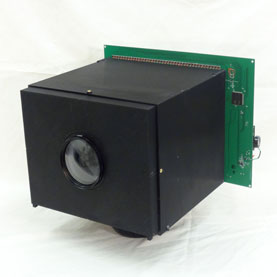
Cam
The researchers at the Columbia University have created a futuristic and quite unbelievable self sufficient camera. A simple video was shown first by the researchers wherein a person was seen changing his facial expression each time, he moves his head either upside and down followed by side to side movement. This video appeared to shot centuries ago but the concept and design is relatively new and refreshing in every essence.

The video here is not in the question but the device with which this video is recorded is turning heads. This particular camera has used a cutting edge, futuristic technology which uses light both as source of creating video and harnessing power for the device. This can certainly bring in a new age of battery less camera, which will keep recording videos as long as there is light.

How this concept works? 

The researcher states that they had combined the two different concepts in the mechanism of this camera. One concept center around the camera’s image senor capability of collecting and measuring light along with another concept which uses the photovoltaic cells to convert some of the captured by camera into harnessing energy for the device. It is still an earlier stage of development wherein the researchers at Columbia University were able to develop a self-sufficient camera.

How this new camera works? 

This new self-sufficient camera works directly on the lines of the concept put forward by the researchers. This camera during each of the image capture cycle first works towards records the lights into pixels for producing images, later on it harvest energy and in return works towards charging the sensor’s sensor supply. It is a brilliantly devised concept, which helps in killing two birds with one stone. Capturing of images and powering of the device is done simultaneously in this process.

Future prospects of this self-sufficient camera? 

As said earlier this camera happens to be in crude development stage but it shows a greater promise for wide applications in future. It can easily become a critical part of the networks, prominent feature in consumer electronics along with wearable gadget and other Internet of Things devices. The creator of this camera Shree Naya, Columbia computer science professor, was upbeat about this self-powered camera. He states that very soon companies will be willing put this kind of powerful camera device in their products, which can return high quality images at minimal energy requirements.

This research will be presented as a team’s research at the upcoming IEEE International Conference on Computational Photography in Houston. This self-powered camera not only will provide high quality images but it can keep working tireless to almost forever, as it is self sufficient in harvesting energy. It can see a mainstay use in the popular consumer electronics like smartphone, tablets and other devices. In the security industry, it can work like a charm for providing unlimited supply of surveillance without the need of any external power source.

Monday, 28 September 2015

Canon 250-Megapixel Sensor can Read the Side of a Plane from 11 Miles Away

Canon

Canon’s 250 Megapixel APS-H CMOS Sensor


Everything tends to get under surveillance more than ever now as drones tend to get cheaper and the cameras far more advanced. Canon has now come up with a 250 megapixel APS-H CMOS sensor which could be used in a DSLR.

It is an APS-H size sensor which is about 80% of the length and width of full frame sensor. It seems to be a bit larger than the popular APS-C setup. This has the capabilities of distinguishing letters on the side of flying airplane at a distance of 12 miles. This sensor could be utilised in spy cameras sometimes in the near future.

The Japanese giant camera claims that the 19,580 x 12,600 pixel sensor has set a world record in its size for resolution. This means that each pixel is around 1.5 microns, almost similar as an iPhone 6. One can imagine what the new sensor as an array of 30 perfectly aligned and high speed smartphone sensors could do. The CMOS sensors tend to increase pixel counts.

The consequence can increase signal volume which could result in problems as signal delays.However the APS-H tends to have a fast signal readout speed of around 1.25 billion a second. It is said to produce crisp images.

Videos Can be Cropped & Magnified


Besides taking photos from far-fetched distance, the sensor portrays its high speed by being capable of writing out over 1 billion pixels per second, permitting to capture 250MP video at 5fpsThe footage is shot sharper at 30 times than 4K or 125 times that of a Full HD video.

The videos could also be cropped and magnified without the need of losing image resolution and clarity.Canon has informed that the sensor could be utilised one day in specialised surveillance and crime prevention tools, ultra-high resolution measuring instruments as well as other industrial equipment.

This would mean that when spies may get their hands on technology, it would not appear in a standard DSLR camera in the years to come. As Cannon is looking forward in marketing its new sensor to specific audiences comprising of surveillance, industrial equipment and much more, it could be helpful to make way for practical light-field camera as well.

Future of Imaging


However the big issue with light-field products like the ones from Lytro is the amount of resolution they give up to gain their ability in capturing dimensionality and change focus in post-production. Ren Ng, the founder of Lytro had made it transparent that the company had been built on the premise which sensor resolution would tend to continue on improvement, making the compromise more reasonable.

Based on how much of the light-field that a camera may be designed to capture, it could lessen the native sensor resolution from about 10% to 90%. With a native resolution of 250MP, even a 90% resolution would probably produce a respectable 25MP image.

As Canon continues to make headway with its recent announcement of ultra-high definition megapixel sensors, there seems to be some interesting ideas for the future of imaging. Application for ultra-high definition sensor tend to differ, however, they would be utilised in government surveillance, astrophotography or space exploration and geological surveillance.