Tuesday, 30 December 2014

Online Privacy A Tricky Issue

PewResearchCenter
According to the survey results released by the Pew Research center and Elon University's Imagining the Internet Center on Thursday, the future of privacy appears to be totally muddy. The survey reflected that nearly 2500 internet analysts and internet experts have been completely divided on the issue of future of privacy. They have divided opinion on whether the policy makers and technology innovators would be able to create secure, trusted, and popularly accepted privacy-rights infrastructure by year 2025. 45% of the people in the survey believed that there will a structure created based on the privacy rights but the remaining 55% were having completely different opinion as did not believe that there could be any infrastructure. According to Lee Rainie, Pew's Director of Internet, Science, and Technology Research, there is lot of disagreement about what the future holds for privacy.

Survey: 

The Pew-Eton researchers didn’t opt for the traditional means of conducting the survey but they carried out the survey among the hand-picked respondents and requested them to elaborate their views on their yes or no answers. The responses include a very dominant theme pertaining to the likelihood of a strong privacy infrastructure that can be established in the next 10 years. Rainie stated that now people have got open and spending most of the time in the public eye hence the question of privacy gets restricted to special circumstances only. Postindustrial era has made every person life completely public.

Accepting the trend: 

In the coming years, people will start continuing the trend of living a very public eye. People have started exchanging person information to availing services now. People have started using their personal information in the form of currency. According to Hal Varian, Google's chief economist, today’s disagreement of privacy will confuse the denizens of 2025. Privacy will be deemed old fashioned in the next 10 years. Putting restrictions of service will be overshadowed by increasing benefits of personal, digital assistants and cloud computing. Every will feel secure due to the advancement in the technology in terms of monitoring and tracking.

2025 will be a year, which will consider people ordinary if they don’t have any photos online. People who will not share their personal information will be not credible and trusted less. People will find them inhuman, as they won’t be able to see their discretions. People will start demanding encryption ability; they would like more transparency in the private sector and with the governments. The mere idea of framework for privacy is a fantasy. Equipments will allow the users to relay their information. The current levels of surveillance will become very pale and people will communicate only through net.

Companies have to become more careful in terms of data collection and sharing to ensure privacy factor for the customers. Experts say that if the privacy keeps on being eroded, the class issue might start again. Therefore, whatever may be the state of privacy in 2025, but for sure it will not be the same as today.

Once Again Microsoft Is Ready To Set IE As the Default Browser


Internet_Explorer
Once again Microsoft is set to make the IE as the default web browser in Windows, as from last five years, Microsoft was forced to provide the choice of web browser in Windows for European market. 

In 2009, due to the ruling of EU, Microsoft was forced to offer the choice of web browser in European market because it was found that Microsoft is unfairly abusing the monopoly in operating system and pushing the millions of users to use the Internet Explorer. But the deal with EU was only for five years to play fair and now the period is over and Once again, Microsoft is total free to set the Internet Explorer as the default web browser in Windows.

As we all have seen Internet Explorer as the default Windows web browser from long time, Internet Explorer 4 was bundled with almost all versions of Windows after its invention. As the time passes Internet Explorer get the vital part of Windows, until it hit the mother lode; Windows XP and Internet Explorer 6. The pairing of Windows and Internet Explorer has gain more than 95 per cent market share in PC and browser segment.

As we all know that Microsoft is in very powerful position and have a kind of monopoly in operating systems, and for this only success of Windows is important. Both, EU’s European Commission and as well as United States’ Department of Justice found that these practices are objectionable, but it eventually get the fairly protection in court cases. In US, under original ruling Microsoft was found guilty, but split ups never happened and it settled when Microsoft get opened for APIs to third parties.

However, In the Europe Microsoft faced some serious consequences such as fine of $1 billion and the agreement to include a Browser Choice ballot in Windows. This ballot first ran while installing the a copy of Windows in Europe and it was used to offered 11 different browsers on two pages where they was arranged in random order at page load.

The first page of consist of “first tier” web browsers such as; Internet Explorer, Opera, Firefox, Safari, Maxthon or Chrome, where as second page was featured the lesser-known “second tier” browsers such as; Rockmelt, Avant, Sleipnir and more. The basic idea was behind this to give the choice and opportunity to user to select their preferences for installing a different browser, But now after 5 years once again Microsoft is free to set Internet Explorer as the default browser in Windows.

In some ways for Microsoft, it’s good that ballot is gone, now Internet Explorer is back at square one with more than millions of new Windows 10 and Windows 8, where users will have to use the Internet Explorer without any choice. Now it’s obvious that Microsoft’s browser market share in European market will change, without any doubt. But the truth is that each and every user know how to download Firefox from Internet Explorer.

Researchers Build Room-Temperature Memory That Doesn’t Need Current To Retain Data


Mgneto Electric
In present all computer memory works with simple principle, which is to use the electrical current for changing the charge state of a cell, and later this charge state can be read by other memory controllers, no matter we are talking about RAM or NAND flash which is identical and basic property between them.

Researchers of Cornell have demonstrated and announced about the device, which is based on bismuth ferrite to store and retrieve data without an electrical current. The implications of these principals could be found a long time from now on room-temperature.

Magneto-electric memory is attractive because it removes the effect of electrical currents that is useful for substantial fraction of power consumption in a system. If cache subsystems or DRAM can draw minimum electrical power, so there is possibility the battery life of device would be increase. This impact of shifting to alternative magneto-electric or ferroelectric memory systems could be substantial, which can be count as traditional gains for adopting new process nodes.

Bismuth ferrite known for to exhibit the ferroelectric and ferromagnetic both properties, it means that it has its own magnetic field as any common magnet, but the polarity of this field can be switched with the help of an electrical field, all you need to apply the electrical field to the device. Exploiting these prominent capabilities on a room-temperature is a major achievement, which can be revolutionizing for modern electronics if any how anyone can figure out how to build devices from it.

This Cornell research explains and demonstrates a single switching cell which can hold the bit of data. ERMs are cutting-edge materials which haven’t been proven commercially, but shows many promise if one can figure out how to use it and manufacture them in large volume. This category is directly linked to Emerging Research Devices (ERDs).

From OLED to EUV (Extreme Ultraviolet Lithography), the market is filled with technologies which can ramped much more slowly than originally forecast. At first look these issues seems unrelated as they cover the three completely different areas of expertise.

The New Yorker have modern piece on this because they relates it to grapheme. As Graphene is brilliant and awesome stuff, and it’s conductivity at room temperature to a degree is possible which was dream in case of copper wire. It is incredibly durable and strong

The problem with Graphene that it lacks in production because it’s common for elements and capabilities are languish for centuries before finding its actual applications. In present the most promising work is to find the way to incorporate it into existing products.

The incredible promise with Bismuth ferrite is to own the formidable stack of obstacles, but it’s not clear that we have build stacks of these devices at scale to switch them at speed or not? The challenges between creating an entire memory array and a single piece of bismuth ferrite at room temperature can’t be understated.

Protect Your Guns with a Safe that Can Stand Up to the Test


Safe
When you own a firearms, whether it is only one or you have a substantial collection, you need to make protection of your guns a top priority. You simply cannot leave them to chance. Take responsibility and store them properly in a gun safe that will get the job done. With a company like "GunSafeNow", you'll find a full range of a safes. Check this out and find the safe that works for you.

Think Fire Resistant for the Ultimate Protection

Your guns are a major investment. You need to protect your valuable firearms. With a selection of fire resistant safes, you can rest assured that your collection will be safe in the event of a fire. When you choose a safe that has been built to withstand the heat, you can count on fire-resistant materials and insulation to work hand in hand. The interior temperature will be controlled with the exterior will hold up when the temperature is rising.

Keep Your Collectibles, Valuables, and Important Documents Safe as Well

When you choose a gun safe, think about more than your guns. You can also protect your valuables and essential documents. From collectible items to precious jewels, your photo collection, and special items that hold sentimental value, you can rest assured that they will be safe from harm or theft. You will have peace of mind when you have selected a safe that can suit your purposes.

Be Prepared for the Unexpected

Like the Boy Scouts, it's best to be prepared for any eventuality. Hopefully, you will never have a fire or an intrusion in your home. However, you cannot predict the future. When it comes to your firearms, it's especially important that you take that extra step to secure your guns. While insurance policies can take care of financial losses, you cannot reverse tragedies that occur when guns fall into the wrong hands.

You don't ever want to deal with the heartbreak of losing someone who is dear to you because of a firearm accident. When you have a solid, reliable gun safe, your guns will not fall into the wrong hands. Only those who are authorized to open your safe will have access to the guns in your home. It doesn't matter if they are not loaded. When you put them in the safe, you'll know that they are truly safe.

BMW's Self-Parking Tech Relieves Drivers From Circling the Lot


Self- Parking BMW

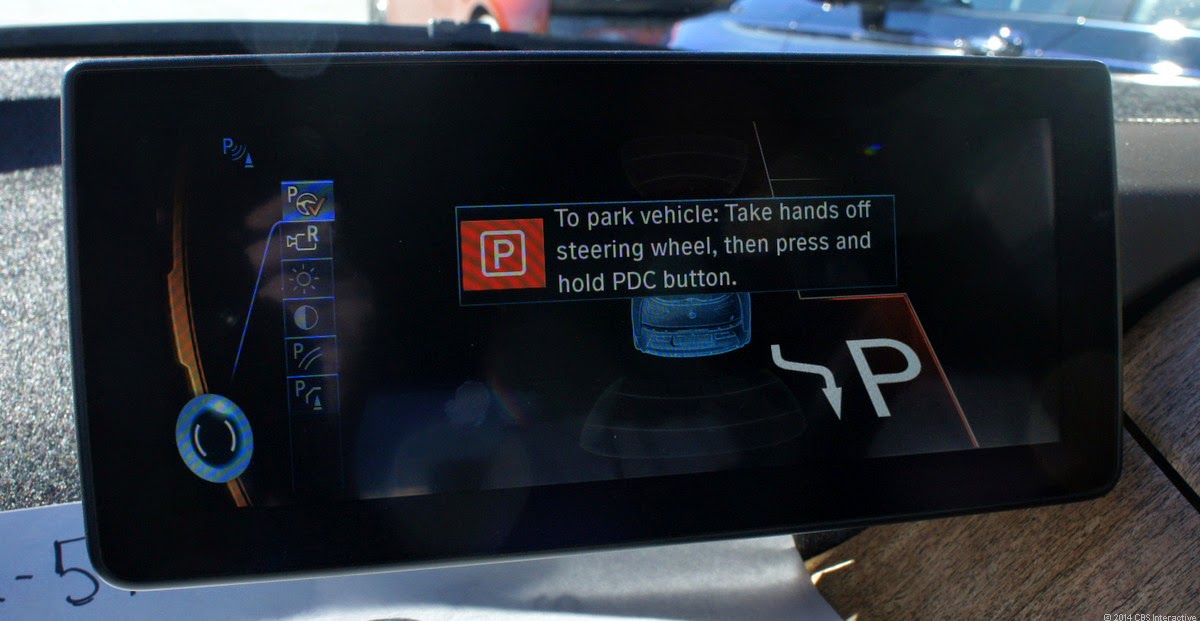
BMW is expected to highlight their recently previewed automated parking technology at the International CES in Las Vegas next month. The company will be demonstrating the new technology at the trade show in their electric i3 model. The Remote Valet Parking Assistant technology features 36-degree collision avoidance apart from environmental recognition and secure position.

The technology makes use of four advanced laser scanners, which have the ability to identify impediments such as obstacles and columns and can chart a route to a parking spot that is completely reliable. The technology also calculates the time it will take to return the vehicle to the driver at a given time, based on the total time it took the system to navigate and locate a parking spot. The added benefit of this parking assistant is that it is operable through a smart-watch as well.

Technology for controlled environment: 

The company has clearly suggested that it might take until 2020 for the complete implementation of the technology but still it is not something, which can be used on a daily basis on parking streets or lots. This will be limited to automation-friendly and very specialized parking structures.

It is a concept of combining a controlled environment with the technology to make a car react. Literally, this feature will be bonus for people with luxury cars and can be easily used at casinos and golf courses. According to telemetric program manager with Frost & Sullivan, Praveen Chandraskar, even though this technology meant for the controlled environment is easily 7-8 years away, what can cause a challenge is making the technology usable in the uncontrolled environment

Effortless parking: 

Even though parking assist technology is already a feature in many vehicles but at the moment it still requires a person to be in the driver’s seat. According to Michelle Krebs, industry analyst for AutoTrader.com, Ford and Lexus already have the parking assist technology added in their vehicles from quite a while. She added that we are taking steps towards making the parking assist to be fully automated but it might take some time for a car to Self Park.

According to Kerbs there are many insurance and regulatory issues that have to be addressed first. Another main aspect to be remembered is about creating trust among the customers about this technology. According to their survey, nearly 65% of the customers deemed the technology way too dangerous but are looking out for features, which has already been included in the technology.

What’s waiting for customers in future? 

Even though most of the customers are still not convinced about the technology, luxury car makers like Audi and BMW have already started using their own automated parking solution. BMW is a step ahead with their smart -watch-enabled control for Remote Valet Parking Assistant.

Smart-watch is currently the style statement and the company has used the same for added attraction. This technology to be used in public platform will require artificial intelligence hence as if now, the company has restricted to the used in the controlled environment.