Saturday, 29 November 2014

Facebook Launches New Groups App For iOS And Android

Facebook Groups App
Facebook is one app, which can be found on every Smartphone. On 18 November, Facebook announced the launch of groups for iOS and Android. This group with have functionality very similar to that of the app due to all being connected to the same social media platform. Users will be able to download Android app directly from Google play store, whereas iPhone users get this app from the Apple’s App Store.

What is the group all about? 

Compared to the regular Facebook website accessible on the PC and on the Facebook mobile app, the group app will have lot in stored for the users, which extends more than basic functions like chatting, discussion, collaboration, and planning. Groups for iOS and Android the users to choose between different groups, they will be able to join new groups, manage their notifications, and learn about additional features and contents.

According to Facebook, the main idea for building this new app came from the people who are interact more in their groups. The whole objective is to give people an app, which will provide them an easier and faster mean of interacting in their chosen groups. However, people need to remember that, Facebook is in no mood to remove the group feature out of their main app as they did with the messenger application.

The advantage of this app is that, if you already have Facebook main app and messenger app on your phone, then when you trying to login to Group app, you will get a notification asking if you would like to login as the same person. The account holder of the Facebook will not have to login separately in all these apps of Facebook. In the Facebook group app, the users will get their groups aligned according to their preference and usage. This will allow them to move easily between each of these groups. Since all these apps use the same icon (Facebook), notification are received in the same form. However, the user’s can change this in their settings option.

According to the recent performance report, the company claimed that as of Q3, 2014, they noticed 700 million people using the groups every month. The Company is not considering this app has any experimental launch but considering it part of their main operation on the line of messenger app.

However, as this app has been developed by the same company, which produced many experimental apps, suggesting that Facebook is still not very confident about this new app. The company is releasing the app on iOS and Android platform all around the world, but they do not intend to get windows anytime soon. Although the company has not made any upgrades in the Group feature but it is still a very popular feature of the main app. For a long time people expected upgrades to come out and the rumor mills indicated the time for September.

For PC users, they should soon be expecting notification about groups that you can join.

3D LED Printer Makes a Contact Lens Display Possible


3D LED Printed lens
3D Printed Contact Lenses 

According to researchers, 3D printed contact lenses can now be used like Google Glass or head up display showing the wearers’ data as well as monitor their health. 3D printer build up metallic or polymer material to form objects when instructed by computer code that conveys to the machine the desired dimension together with the appearance of the product, though this machine is more complex.

Researchers have started constructing prototypes for contact lens displays, and their biggest impediment was parts of fabrication which on a theoretical level is not difficult to build display in a contact lens but building and placing the tiny interrelated parts on a tiny polymer disk is a difficult task.

The 3D LED printer is a 3D quantum dot LED printer which on breaking the concept of an LED to its most basic form, researchers envisaged that they need not think of LEDs like small plastic light bulbs but stacks of interacting substance.

The printer on its part could lay down an LED with a sandwich type of a structure which is not unlike a single pixel in a display of OLED and get emissive layer which is nanoparticles of cadmium selenide that is referred to as quantum dots.

Active Approach

The quantum dots or nano sized crystals of certain substance exhibit unique or particular useful electronic properties. These are sandwiched between one layer which can donate electrons and one layer that accepts them and the entire process can be fused to a surface due to the bottom adhesive layer that is activated with the help of UV light.

Moreover, the printed LEDs are ultra-thin, almost transparent as well as flexible. The transfer of electrons through quantum dot layer causes the dots to produce photons of light and the main advantage of it is that they can be made to emit light at very specific wavelength or colours.

It means that the quantum dot screens can display more recreations of colour accurately but it would not be the first priority for contact lens display which will get static, sensible image in the user’s eye.The pixel on the other hand in a contact lens display could take one of two forms and the active approach uses individual pixel as a light source and emits photons in the eye, creating an image directly.

Passive Approach 

The passive approach on the other hand uses less power though it would be more difficult using individual pixel to bend the incoming light from the environment to portray a new picture on the retina. The issue with active approach is that it needs a good amount of power to go on and wireless power collection relies partially on physical size of the collecting antenna.

When the antenna must be physically fitted in a contact lens, it creates a hard upper limit on power supply. It is unlikely to start printing smartphone screens pixel by pixel since manufacturing in bulk would be quicker and cheaper and while doing so, things like putting LEDs in circular area of contact lens less than 2 mm, it could be helpful. The cost of the prototype print cost about $20,000 to create though there is a possibility in reduction of cost in the near future.

Friday, 28 November 2014

Frontal Car Crash Test gives Several Top Manufacturers poor rating, while Toyota Receives Good

Toyota
The frontal crash test by Insurance Institute for Highway Safety (IIHS) has become a serious benchmark for ensuring traveller’s safety since it made the first appearance. Nowadays car manufacturers from U.S. is checking the newly build car’s efficiency to reduce the damage when it faces frontal crash with another vehicle or tree or poll. Recently IIHS performed a frontal overlap car test with four majorly sold minivans in U.S., which are The Chrysler Group LLC Dodge Grand Caravan, Toyota Motor Corp Sienna, Nissan Motor Co Quest and The Chrysler Town & Country.

Minivans are hugely popular in U.S. villages and small town because of its capability to carry small to large carriages and also almost all delivery agencies use this type of minivan for transportation in U.S. towns. Crash test is being done to check how the car defence prohibits the hit to make severe damage. According to the test report, except Toyota Motor Corp Sienna, rest of the candidate minivans performed very poorly in the test. Toyota’s minivan joins Honda Motor Co Odyssey, which received ‘best safe pick-up’ rating from IIHS earlier.

How the test is being performed?

This test by IIHS only replicates the actual event of what happens during a road accident involving the frontal part of the car. In this test, around 25% of the front of a car hits an obstacle at an average speed of 40 miles per hour. The camera and sensors installed at different parts of the car, evaluates the car’s response to the hit.

Detailed report:

Minivans are popular mainly within parents and family-minded customers because of its road safety feature. According to the test report, three of four candidate models, namely The Chrysler Group LLC Dodge Grand Caravan, Nissan Motor Co Quest and The Chrysler Town & Country, when hit with an overlap obstacle, showed severe damage to the car and allowed high degree of intrusion involving the driver’s area.

A spokesperson from the institute stated that the Nissan minivan structure just collapsed like ‘a house of cards’. The Chrysler automobile minivans also showed severe damage as the steering wheel moved out of the coordinated place. This results in making the airbag less efficient and simultaneously driver’s head hits the dashboard. IIHS test report given The Chrysler Group LLC Dodge Grand Caravan,Nissan Motor Co Quest and The Chrysler Town & Country very poor rating, while Toyota Motor Corp Sienna received an acceptable rating prescribing the car safety to be ‘Okay’.

Toyota Sienna was also ranked in ‘Top Safety Pick up+’ car list, as it warns the driver prior to any possible front collision and also features an automatic brake system.

Response from the manufacturer:

After the release of test report, concerned manufacturers released mixed responses. Nissan released an official statement which says the company will continue the revision of the models and will improve the safety. While Chrysler automobile group stated that this single test cannot state their car to be damage prone.

BMW Decides To Manufacture the Takata Airbag Inflators in Germany


BMW
The Germany based BMW has announced its plans to help the Japanese counterpart company in delivering the replacement inflators quicker by assisting them in moving their production facilities from Mexico to Germany. BMW has explained that their decisions are in wake of the serious issues regarding the quality of the manufacturing at the Mexico plant raised by the U.S. safety regulators.

What Made BMW Take such Dramatic Steps? 

Automobile manufacturer who actively uses the Takata inflators also includes the Toyota Motor Corp. The Takata inflators seem to have the potential of blowing up with excessive force and spraying occupant with deadly sharp metals. It should also be noted that it isn’t feasible to switch to other suppliers in order to meet the demands for the replacement parts at this juncture.

Therefore the U.S. safety regulators are lending a helping hand by supporting BMW efforts in shifting the inflator production plant from Mexico to Takata plant in Freiberg, Germany. The Takata inflators are being currently investigated in at least five death cases in U.S.

German Facility Promises To Boost Production Capacity

Japanese company has the ability to produce 200 inflators per hour on its single production and at the moment it just has two of them in active use. This concludes that that it would be able only 1 million replacements in next five months at this snail pace. But the demand stands at 32 million for replacements parts. Therefore this shifting of production facility is taking place in order give a genuine boost to the production capacity of Takata.

Takata Runs into Serious Trouble

U.S. regulators have asked several questions relating to the Mexian plant production quality defects. The officials from Takata, Chrysler Group, Honda Motor Co and NHTSA would be testifying to a U.S. Senate panel in this regard on Thursday. Furthermore NHTSA has also ordered Takat and five other automobile manufactures to expand the U.S. recall of vehicles with the defective air bags.

Automobile Manufacturers Look For Alternatives

Companies like BMW, Toyota and Ford Motor Co are looking for quick solution to the problem of getting replacement parts. They are planning to buy replacement parts from the rival supplier but even such option is unviable as it would more than a year to get an alternate inflator production line in place.

Some of the automakers are looking to use completely new parts from other suppliers but they soon found that doing such a thing would require bringing in extensive changes in their cars. Companies like Honda, Toyota and Ford had considered this option. However problem would not cease to exist by implementing this as the suppliers would still fall short of keeping up with the demand. Even the companies go ahead with this proposition and build cars as per the exact specifications of the new inflators still it will take around a year to get it in the market.

Therefore the companies like Nissan, Mazda Motor and General Motors have dropped this idea and hope that Takata would be able to solve its supply problems in due time.

Will Apple's Next iPhone Capture DSLR Quality With 2 Lenses?


Apple
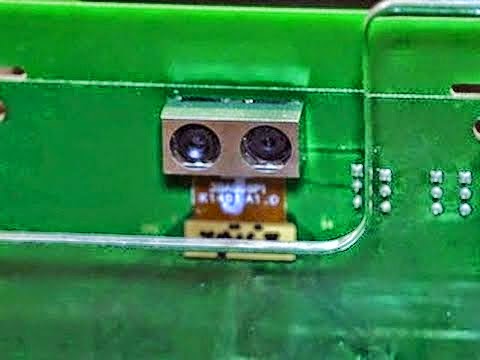
iPhone is one of the most loved brand and trusted among the people around the world and this could be the reason why rumors always keeping along with the brand. Although Apple has just released their latest version, iPhone 6, there are already market rumors that the company is working on the next version of the phone having two lenses on the camera, which will produce images with DSLR-quality.

How it all started? 

This rumor was sparked after a post on podcast entered by Daring Fireball’s John Gruber. John is highly respected Apple-focused commentator and well connected in their ecosystem. He is known to have never made any unwarranted predictions. In the month of August, John posted an update indicating that Apple is working on their wearable device thing and it is expected to be released in September. However, as people started getting curious about the same, he later stated that the post was just a joke and was meant to poke fun of the Motorola's smart watch, which resembled a flat tire. Whether rumor or joke; the company indeed unveiled their wearable smart watch in the month of September.

No damage done due to rumors

These rumors have not done any serious damage to the company and been told in a simple statement to the public. It all started with the statement indicating the news of the company working on upgrading the phone’s camera to two lenses. The lenses will be able to capture SLR quality images. As per to John, the new camera will not be able to replicate the SLR quality at technical level, but this sure is a huge step from the company’s end.

So what is special? 

John backed away from any kind of comparison being made between iPhone and SLR or DSLR on technical basis. The main point of this post was to highlight the current iPhone users will be able to migrate to the new high-end camera. Apple’s iPhone is known to capture the best of the images and one of the best camera due to which many people have stopped using the stand-alone camera. If the rumors have to be true, then this giant leap in terms of capturing moving images without any blur and ability to zoom will be enough to encourage many iPhone users to upgrade their iPhone 6 to the newest version.

If Apple is considering this option then, they will not be the first one to try this option out. HTC has already used the dual-camera system in their HTC One M8. HTC phone allows the users to change their focus angle even after snap has been taken.

If Apple is working on taking this new leap in terms of improving the quality of their camera by using CMOS imaging sensor system of Sony, then this move will be wholeheartedly welcomed by their customers. Although it is unlikely that the company has get the DSLR quality in their iPhone, but any change will be enough to spark the excitement in the customers towards upgrade.