Wednesday, 16 December 2015

Moonfruit takes Websites Offline after Cyber-Attack Threat


Moonfruit
Cyber attacks have been increased rapidly throughout the globe. Sony was hacked just a few months which caused leakage of emails, movies details and other. Snapchat has also been hit in the past and now every website is playing cautious when it comes to imminent cyber attacks. Recently Moonfruit took thousands of its hosted business and personal websites offline after being threatened by a cyber-attack.

What is Moonfruit and why it took websites offline? 

Moonfruit is a UK company which helps its consumers and small business to create websites and online stores. Moonfruit is highly popular among the users in UK for its affordable pricing and efficient website builder which makes it simpler and easier to create demanding websites with less coding. Moonfruit has taken thousand of its customer’s website offline after receiving threats about a cyber attack.

Moonfruit had stated that it has kept thousands of its customer websites offline for up to 12 hours in order to make necessary changes in its infrastructure and to safeguard its consumers. Moonfruit has also perceived problems last Thursday when it suffered from a 45 minute of distributed denial-of-service attack. In this attack Moonfruit computer were overwhelmed by unwanted traffic and it made the use of its legitimate services non-functional.

Moonfruit consumers suffers from being offline

Moonfruit has informed its consumers about the decision of taking down the websites for up to 12 hours from Monday and it has generated some angst among the consumers. One such consumer Reece de Ville, a filmmaker, has complained that Moonfruit has been slow in communicating this decision which has the potential to disrupt the website performance and reach.

Moonfruits users had complained that this is bad time for taking down the websites as the holiday season is in full swings which brings higher web traffic and increases the sales volume. Apart from losing money through sales another problem faced by the users is the loss of potential clients or new clients within a day. Online stores will sells items especially for the holiday season like gifts and greeting cards store will take a severe hit in this Christmas week.

Armanda Collective behind the cyber attack threat

Moonfruit has sent emails to its customers where it explained that a notorious cyber hack group called Armanda Collective is attempting to extort money out of the company. Armanda Collective had previously successfully attacked the websites of web mail companies which included Hushmail, ProtonMail, RunBox and quite a number of Greek banking institutions.

The customers have been furious and quite unhappy with the loss of sales and potential clients. But it should also be understood that Moonfruit is a victim too of unpleasant criminal act where cyber criminals are threatening its business for extorting money. Moonfruit is working with the law enforcement authorities regarding this matter and hopes to dissolve this threat at the earliest. In the mean time customers have to bear with the Moonfruit decision of keeping the hosted websites offline.

Revolutionary 'Flat' Camera Could Make Your Next Phone As Thin As a Credit Card

Camera

FlatCam – Miniature Camera – Sensor Chip with Grid Coded Mask


According to Rice News, a miniature camera developed out of the Rice University labs comprises of a sensor chip with grid like coded mask that enables various channels of light to reach the sensor. FlatCam is said to be similar to a microchip, which utilises computer algorithms to process whatever is detected by the sensor after which it tends to transfigure the measurements into videos and images.

An assistant professor of electrical and computer engineering at Rice, Veeraraghavan has commented that `as traditional cameras get smaller, their sensors also tend to get smaller and this means that they collect very little light. The low light performance of a camera is tied to the surface space of the sensor.

 However since all the designs of the cameras are generally cubes, surface space is tied to thickness. The design decouples the two parameters, offering the ability to use the enhanced light-collision potential of large sensors with a really thin device’.

The FlatCam could ultimately be turned into wearable, foldable as well as disposable cameras. However, the team state that photographers would be more likely to stay with lens-based systems.

Several Possibilities – Moving from Cube Design to a Surface


Developers state that the camera would be a necessary step in other applications. Baraniuk the Victor E. Cameron Professor of electrical and Computer engineering states that moving from a cube design to a surface without forgoing performance, gives rise to several possibilities.

 He added that they can make curved cameras, or wallpaper which is actually a camera and one can have a camera on credit card or a camera in an ultrathin tablet computer.The model tends to produce 512-by-512 images, a resolution which the researchers are expecting to increase as it tends to progress.

The models do not seem to have viewfinders, however if necessary, researchers state that a cell phone screen could someday do the job. Rice alumnus and assistant professor of electrical and computer engineering at Carnegie Mellon University, co-author Aswin Sankaranarayanan states that smart phone have already featured powerful computers and hence we can imagine computing at least a low resolution preview in real time.

Heritage Shared with Lens-less Pinhole Camera


FlatCam tends to share its heritage with lens-less pinhole camera though instead of a single hole it has a grid-like coded mask placed close to the sensor. Each aperture enables a slightly different set of light data to extentto the sensor. Raw data sent to the back end process, presently a desktop, is organized into an image and just as larger light field cameras; the picture tends to get focused to different depths after the collection of the data.

The lead author of the paper is Rice postdoctoral researcher, Rice graduate Salman Asif together with co-author Ali Ayremlou. Rice alumnus Sankaranarayan is now an assistant professor of electrical and computer engineering at Carnegie Mellon University while Baraniuk is the Victor E, Cameron Professor of Electrical and Computer Engineering and the assistant professor of electrical and computer engineering at Rice is Veeraraghavan.

The research team would be delivering a talk with regards to its work at the Extreme Imaging Workshop on December 17 in Santiago, Chile and published paper is also made available through ArXiv, an online service

Movavi Screen Capture Review


screen capture
Are you able to record video footage directly from your screen? Despite what you may think it really isn’t all that complicated to do so – especially if you’re using the Movavi Screen Capture. More importantly, once you can capture video from your screen you’ll find that it’ll be extremely useful and allow you to record streaming videos and webinars, save Skype calls, or even create your very own ‘how to’ video guides or tutorials.

The reason why the Movavi Screen Capture excels at enabling you to record video footage directly from your screen is largely because of its unique approach. Unlike other software that is notoriously complicated and difficult to use, the Movavi Screen Capture has been designed so that it is as intuitive and straightforward as possible. In most cases, recording the video that you need will just take a couple of clicks.

For all its simplicity in terms of how easy it is to use however, the Movavi Screen Capture still comes with tons of features that will allow you a lot of flexibility. Some of the more interesting features include:

  • Controlling all aspects of the capture settings, including the capture region, frame rate, and audio source.
  • Setting the capture to also record keyboard and mouse actions by displaying the keys that are pressed on screen as well as highlighting the mouse cursor and playing a custom sound on mouse clicks.
  • Easily manage the recording process through convenient hotkeys and timers to automatically stop the recording.
  • Quickly and effectively optimize the videos that you capture for any device or platform using the hundreds of presets that are available.
With all these features, you should be able to capture exactly the video that you need and then save it in the best possible format for whatever device or platform you intend to use it on. As you can see you don’t need to know the first thing about video formats or settings to do so – which once again is part of the user-friendly design of the Movavi Screen Capture.

When it comes to video recording software, the Movavi Screen Capture really has no equal in terms of how easy to use and yet feature-rich it is. Once you give it a try for yourself you’ll be able to see firsthand just how quickly you’re able to familiarize yourself with the software and start recording the videos you require.

Samsung Patent Filings Reveal Exciting New Smartphone Designs


Samsung’s Foldable/Tab Style Design/Scrollable/Bendable Smartphone


Samsung’s patent for new folding and scroll style smartphone designs has been granted by the U.S. Patent and Trade Office recently wherein either of these designs would be substantial inventions for smartphone displays which tends to be led by square flat designs. The patent includes a foldable smartphone, tab style design, scrollable smartphone and a bendable smartphone design.

With the folding phone, the user has access to a screen even while the device tends to be folded and can access additional detailed commands when it is opened like a book. The patent filing also discusses anther sensational new design wherein the phone can roll up as well as unroll like an ancient scroll. The improvement of bendable, rollable, foldable smartphone displays has been reported for years.

Samsung had promoted a concept video on a clamshell style device on YouTube somewhere in 2013. However this patent filing offers some hope that smartphone display would make its way to the consumers. Samsung had already created the Galaxy Round, the first smartphone having curved display. Probably there could be more appealing designs coming up.

Flexible Displays


It is said that for years, Samsung had been working on flexible displays. As per Digital Trends, Samsung had revealed its first foldable phone prototype at the CES 2014 and it was rumoured that its foldable device would be making its debut in 2016. The most regularly depicted design invention in Venture Beat, is a handset which tends to unfold to a full sized tablet.

It eems like a horizontal clamshell wherein the single fold tends to open the same way as a book or a magazine and the device forms as a smartphone when folded and a tablet when unfolded. However, it is not known how the screen could be adapted when in a folded position. The device either tends to fold with the two halves of the screen touching when closed or it could in the opposition structure where both the screens tend to face outward.It has been described as a rollable device by Patenty Mobile.

Users have the option of changing the form of the device by taking the tab and rolling out the flexible display or by pressing a button or an icon which is available at one end of the scroll. This opens the scroll with the preferred app ready for use once the device is scrolled out.

Bendable Design – Bend at Certain Pre-set degree


When the calendar icon on the scrolled device is pressed for instance, the device tends to un-scroll with its full display, portraying the calendar app. The adjustable display of the display in scroll style could include an organic light which emits diode – OLED or flexible LCD display, replacing glass substrate in the display with flexible plastic materials.

The tab style design smartphone does not tend to fold in half like its earlier foldable design but folds, off-centre leaving a tab screen exposed towards the left end which displays the users’ favourite apps. Similar to the scrolled device, the tab style design can be unfolded whenever the user touches the app icon towards the left of the display.

The bendable design enables the smartphone to be folded by being bent and is likely to be bent at a certain degree pre-set by the users.

A Google Engineer is Testing USB Type-C Cables so you don't have to

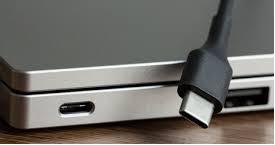
USB

USB Type-C – Reversible Design/Super-Fast Speed/High Power Output


USB Type-C is certainly the future cable, due to its reversible design together with super-fast speed and high power output. Apple as well as Google has both bet big on its normal predictable ubiquity by using it in the new MacBook as well as both of the Nexus phones. But it will still be some time before it would completely replace the usual Type-A and B connectors, which means that those who had rushed earlier would have to stock up on new cable, In other words there are quite a lot of third party cables which have not been fully tested and are likely to destroy the new device.

Fortunately, a Google engineer has been testing out possibly dangerous cables prior to purchasing them. Google’s Benson Leung works on the Chrombook Pixel line and is closely familiar with Type-C together with its requirements. Due to various devices gradually coming out which tend to support the standard, he took the initiative of holding third-party vendors liable, by reviewing their cables on Amazon stating that he had got fed up with the early cables from third party vendors which so blatantly display the specification.

Out-of-Spec Cables


There seems to be plenty out-of-spec cables but Leung’s Amazon profile indicates that there are handfuls ones which are reliable. Leung challenges this assertion as it applies to USB Type-C cables and the results are not too good. Leung who is a software engineer on the Chrome OS team and an engineer on the Chromebook Pixel as well as Pixel C team reviewed several multiple USB Type-C convertor cables.

He evaluated each of the cables manufactured by companies like CableCreation, Belkin, Frieq, iOrange, Juiced Systems, Orzly Monba, Kupx and Techmatte to find out if they met the USB group specifications. The results seemed to be mixed. The cables meeting the relevant USB-IF specifications for their respective features were Frieq, Belkin and iOrange while the rest have one of two serious issues.

CableCreation’s adapters have advertised as being 3A cables though do not cover internal circuitry capable of supporting that power level. Rather than utilising a resistor of value 56kΩ, CableCreation has used a 10kΩ pull up. The Kupx and Techmatte adapter tend to have the same problem while Monba’s adapter does not identify itself accurately at all.

Converters to Operate with Legacy Equipment


By marketing cable which have a Type-A plug on one side though a resistor which must only be utilised where there is a pure Type-C charging path, tends to risk damaging the older hardware with the out-of-spec cable. Some cables seem to be easy to test regarding functionality which may either work or not though several of them are not helpful.

Most of the USB Type-C cables which Leung tested will technically work but if it is connected to the correct hardware it may result in damaged equipment and this type of failure mode is invisible to the consumer. Users are under the impression that their chargers tend to work, unless they are presented with evidence to the contrary.If one tends to have a Chrombook Pixel of 2015 and would prefer to check if your USB Type-C cable contains the proper hardware, Leung has posted instruction on how to do the same over on Google+.

Though he is not signifying that these cables are inferior choice for anything but the Chromebook Pixel, the problem that he has recognized would be common to any hardware. It is especially important that companies need to get these issues corrected since USB Type-C naturally needs these converters to operate with legacy equipment.